Sample Hair Health Plan
This is an example of what your personalised Plan looks like. Every Plan is unique to you.
H A I R H E A L T H E S S E N T I A L S
Your Hair Health Plan
Prepared for Emma T. · March 2026
Clinically reviewed by the Hair Health Essentials Trichology Team
What we’re hearing from you
You’ve noticed your hair feeling thinner and less full over the past six months or so — particularly around your parting and when you tie it back. You mentioned that you’ve reduced washing to once a week after reading that frequent washing causes hair loss, and that you’re blow-drying most mornings on a high setting. Work has been intense, sleep hasn’t been great, and you’re wondering whether all of this is connected. It makes complete sense that you’re concerned.
What’s most likely happening
What you’re describing is consistent with a pattern we see regularly — and the encouraging thing is that several of the contributing factors are things you can change. There probably isn’t one single cause.
Washing once a week is actually working against you. When you wash infrequently, sebum, dead skin cells, and product residue accumulate on the scalp. This can clog follicles, create inflammation, and weaken the hair at the root — which leads to more shedding, not less. This is one of the most common misconceptions we see, and correcting it alone can make a noticeable difference within weeks.
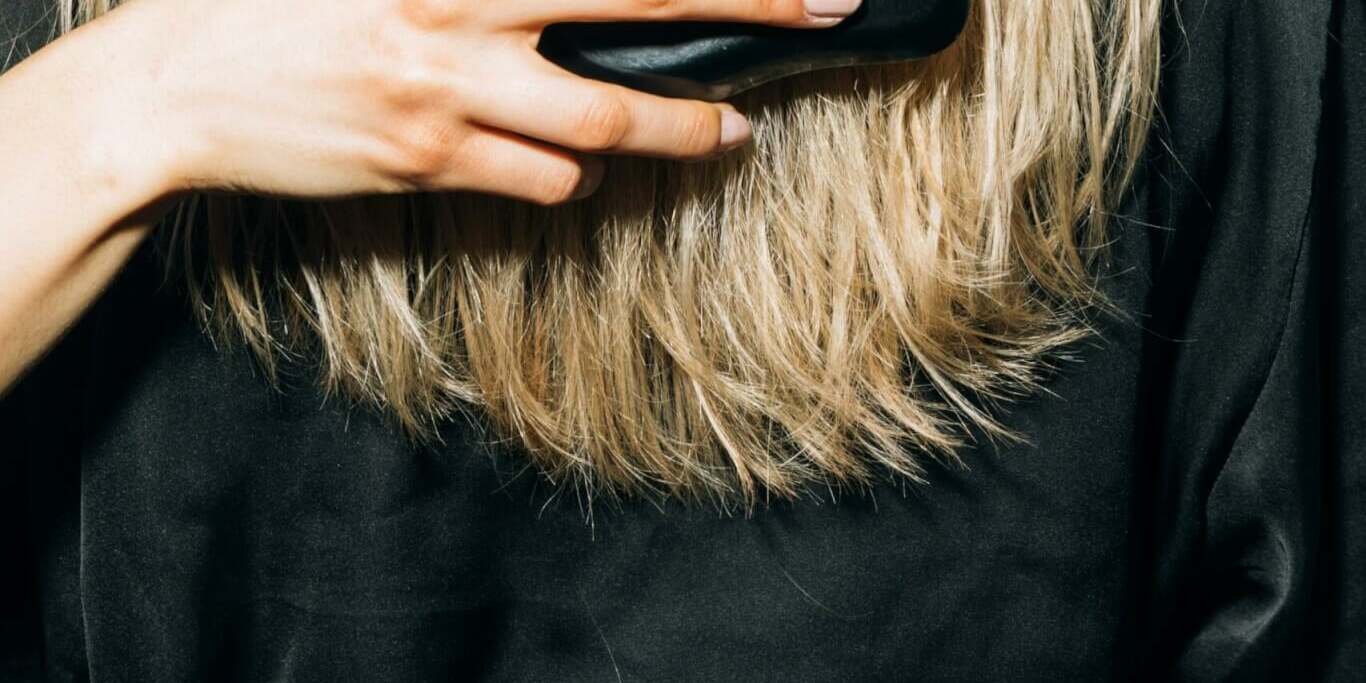
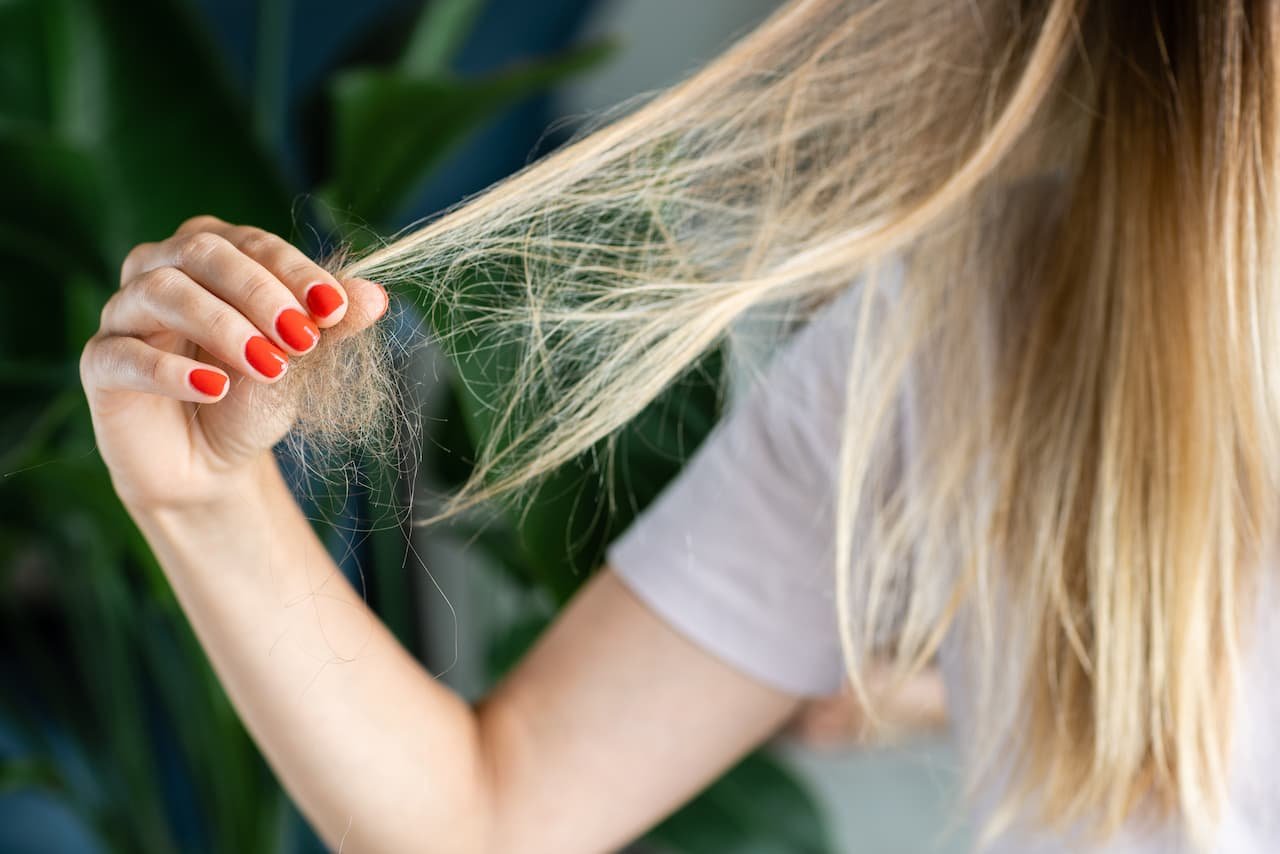
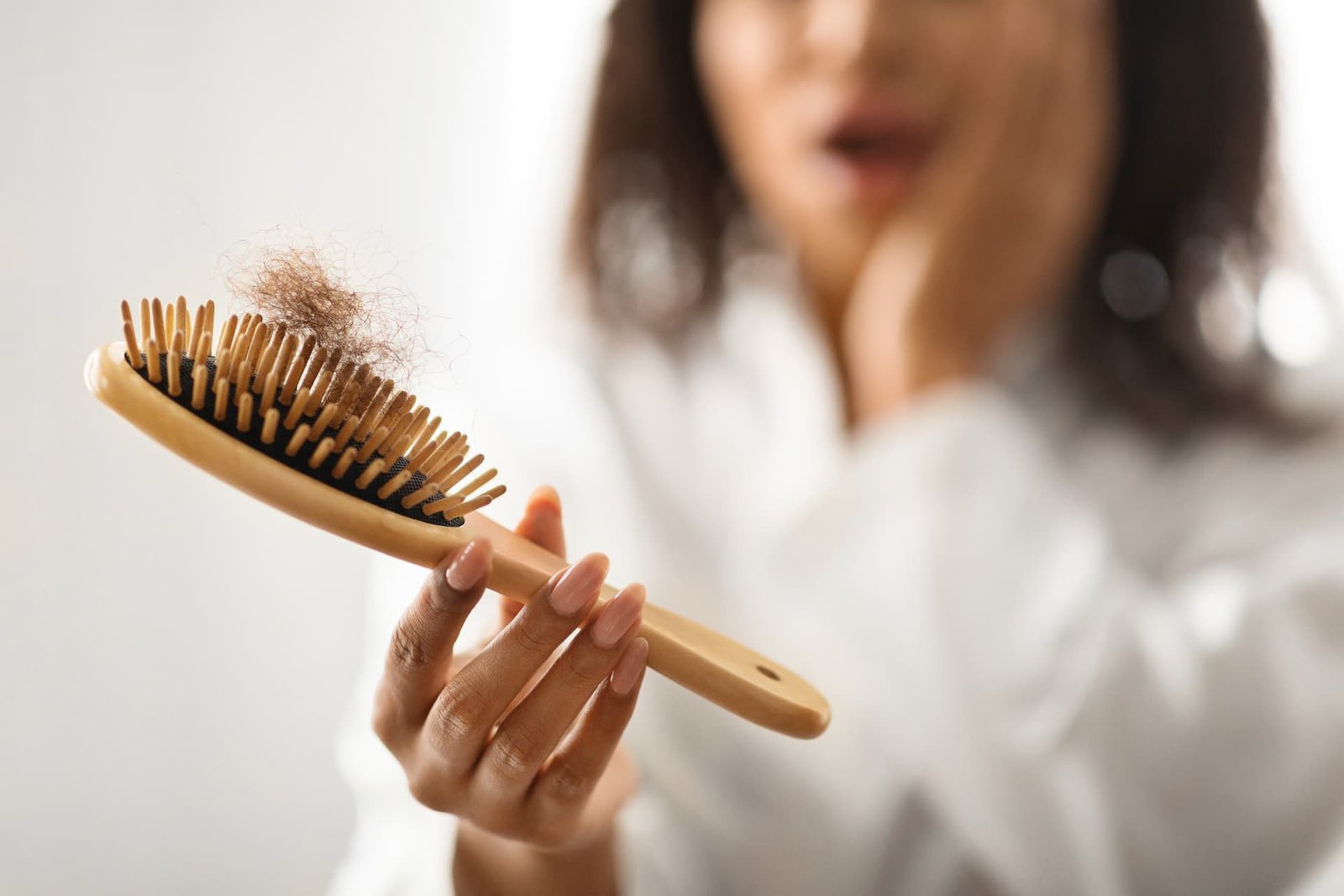
The daily high-heat blow-drying is contributing to the breakage you’re seeing at the front. Heat damages the hair shaft, making it brittle and more likely to snap. When shorter broken pieces sit around the hairline, they can look like thinning — but they’re breakage, not loss. That’s an important distinction because breakage is very fixable.
What your body might be telling you
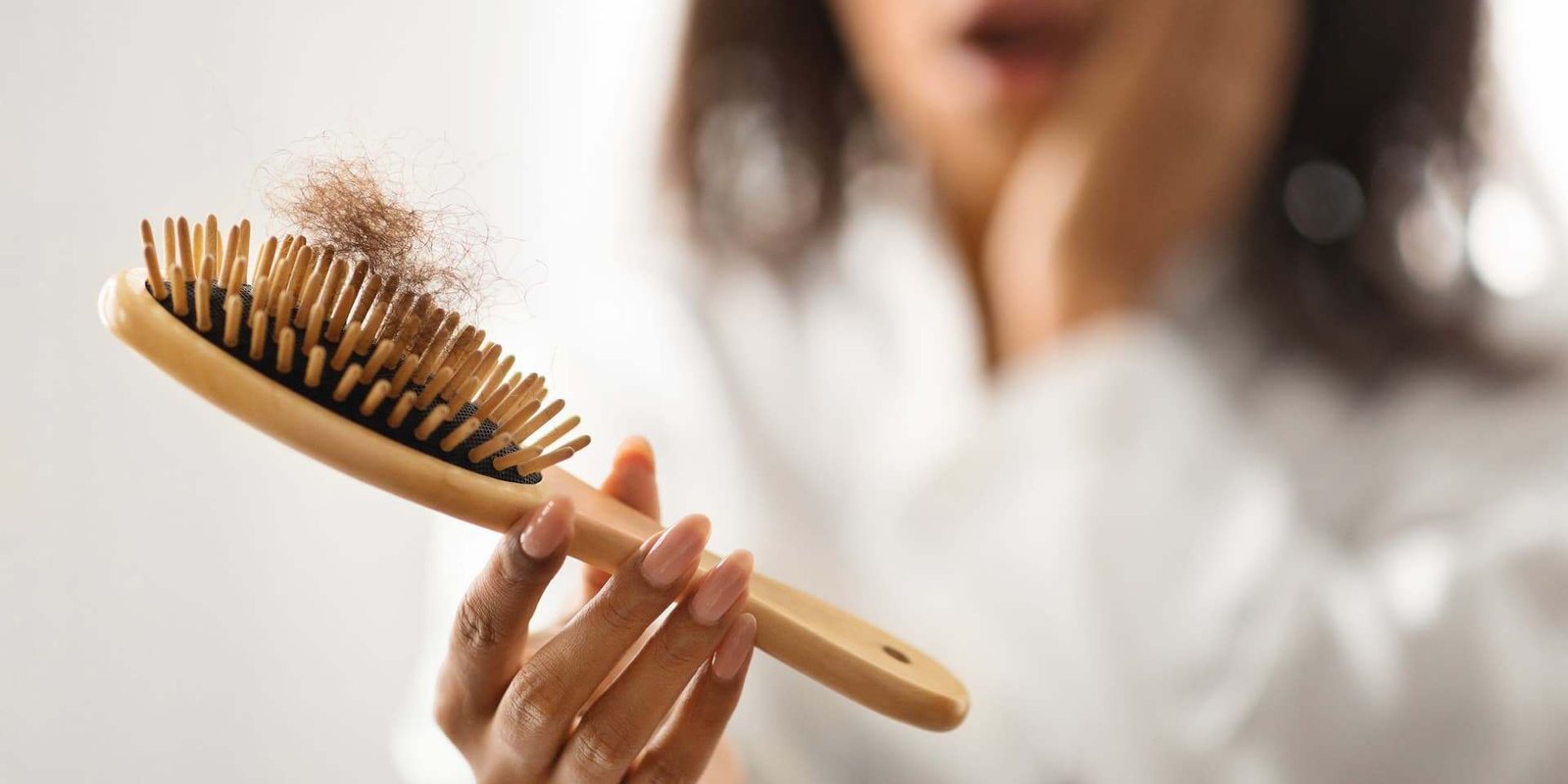
You mentioned that stress and sleep have been an issue. Both of these affect hair more than most people realise. Chronic stress can push more follicles into the shedding phase at once (a process called telogen effluvium), and poor sleep disrupts the hormonal cycles that support hair growth. This doesn’t mean you need to eliminate stress — but it’s worth knowing that what you’re seeing in your hair may partly reflect what your body has been going through over the past few months. As those pressures ease, your hair’s growth cycle will gradually stabilise.
Your recommended routine
Each product has been selected specifically for your situation — not as a generic recommendation.
Moisturising Shampoo — every 2–3 days, scalp only
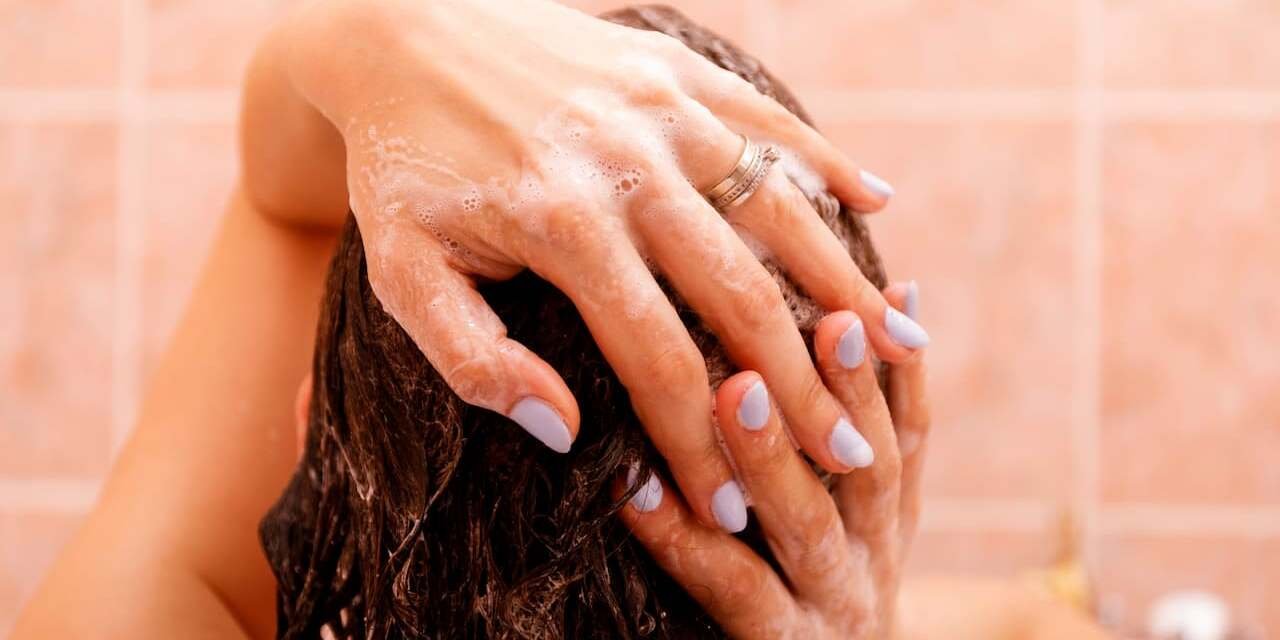
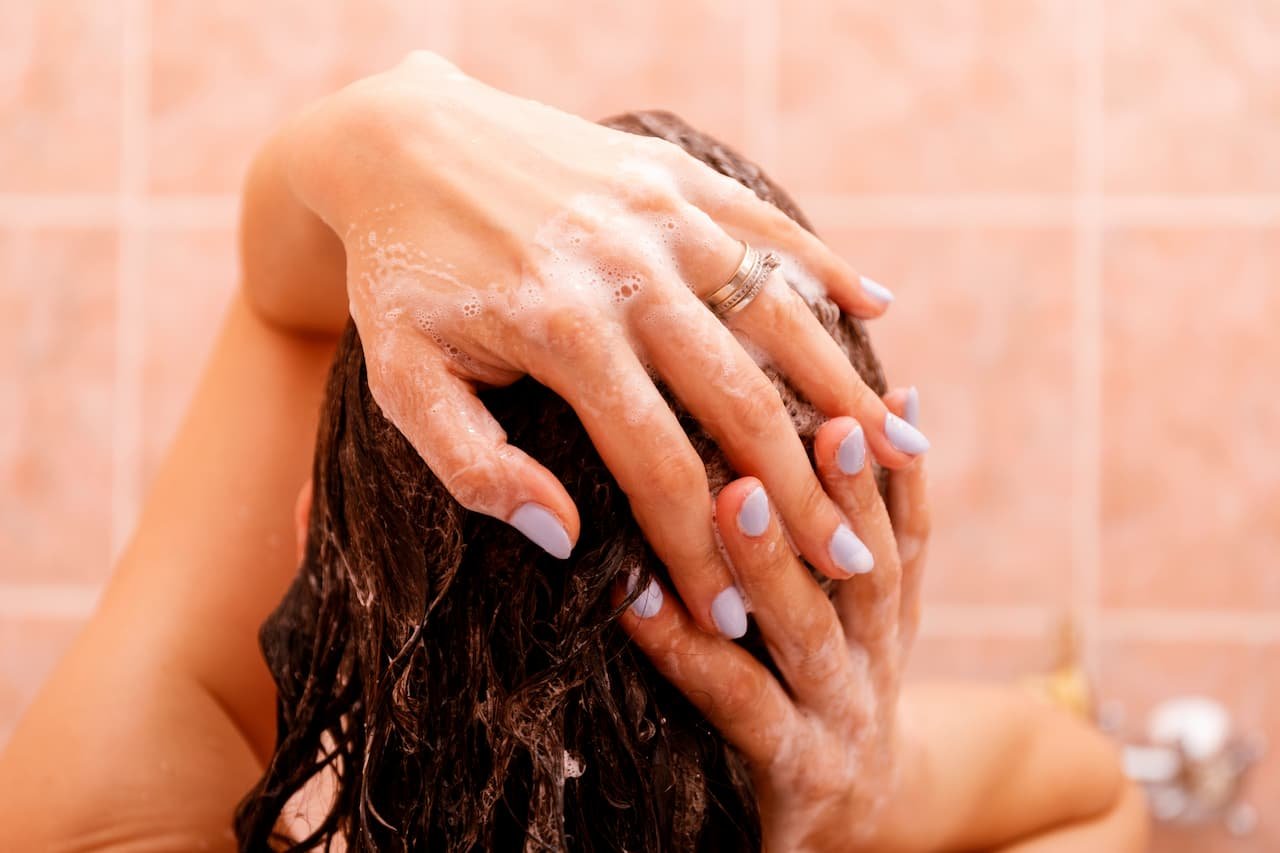
Your current shampoo contains sulfates that are stripping your scalp and contributing to the dryness you described. This replaces it with a gentle, COSMOS-certified formula that cleanses without disrupting your scalp’s balance. Massage it into your scalp for at least 60 seconds — this stimulates blood flow to the follicles and ensures the cleansing agents can work properly. The change from weekly to every 2–3 days will feel counterintuitive, but your scalp will settle within two weeks.
Moisturising Conditioner — every wash, mid-lengths and ends
After shampooing, apply from mid-lengths to ends only — keep it away from your scalp. Leave for 1–2 minutes before rinsing. This replaces the moisture that washing removes and gives the hair shaft a smoother surface, which directly reduces the breakage you’re experiencing. Smoother hair also means less snagging when you brush or style, which matters when volume is already a concern. Works as a system with the Moisturising Shampoo. COSMOS Natural certified.
Rosemary Scalp Oil — 2 evenings per week, parting and temples
Apply along your parting and at the temples — the areas where you’ve noticed the most change. Rosemary oil has genuine clinical evidence supporting its role in scalp circulation and follicle stimulation. Use it on the evening before a wash day, leave it overnight, then shampoo out in the morning. Start with a small amount and build up. If you notice any scalp sensitivity, reduce to once per week.
Keratin Glow Mist — after every wash, damp mid-lengths and ends
Spray lightly through damp hair before drying. This provides a protective layer that reduces heat damage from your blow-dryer and adds a light smoothing effect that makes the hair look fuller. It’s not a styling product — it’s a functional protectant that shields the hair shaft while it’s most vulnerable (wet hair is significantly weaker than dry hair).
A note on blow-drying
Switch to a medium heat setting and keep the dryer moving — never hold it in one spot. If possible, let your hair air-dry to about 80% before finishing with the dryer. This single change will significantly reduce the breakage at your hairline. You don’t need to stop blow-drying entirely; you just need to reduce the intensity.
What to expect over the next 30 days
Weeks 1–2: Your scalp may feel different as it adjusts to more frequent washing — this is normal. You might notice it feels less greasy between washes sooner than expected. The Rosemary Oil may cause a slight tingling on first use; this is normal and will settle. Your hair may not look different yet, but the environment around your follicles is already changing.
Weeks 3–4: This is when most clients notice the first real changes. Shedding during washing should start to reduce. The breakage at your hairline should be noticeably less. Your hair may feel softer and more manageable. These are signs that the routine is working — not dramatic transformation, but the foundation being set for genuine improvement over the coming months.
Signs that your hair may need further investigation
Separately from your routine, there are some signs that suggest a hair or scalp concern may benefit from a deeper clinical assessment or a conversation with your GP. Please reach out to us or your doctor if you notice:
· Sudden patchy hair loss, burning, heavy scaling, or significant redness
· Shedding or thinning that continues beyond 3–4 months with no sign of settling
· Loss of eyebrow or eyelash hair
· A history of thyroid issues, iron deficiency, or autoimmune conditions
· Significant changes in your menstrual cycle or other hormonal symptoms
If you’re concerned about whether hormonal or nutritional factors might be playing a role, a simple blood panel through your GP (including iron, ferritin, thyroid, and vitamin D) can provide useful clarity. We’re happy to advise on what to request if that would help.
Every wash (every 2–3 days): Moisturising Shampoo — scalp only, 60-second massage
Every wash: Moisturising Conditioner — mid-lengths and ends, 1–2 minutes
2 evenings per week: Rosemary Scalp Oil — parting and temples, overnight before wash day
After every wash: Keratin Glow Mist — damp mid-lengths and ends
Blow-dry: Medium heat, keep moving, air-dry to 80% first when possible
You’ve taken the right step. Keep going.
Your Hair Health Essentials Trichology Team
This Hair Health Plan is trichological guidance based on the information provided. It is not a medical diagnosis, prescription, or substitute for medical advice. If you have concerns about your health, please consult your GP or appropriate medical professional. Hair Health Essentials provides trichology assessment and hair and scalp recommendations.
© 2026 Hair Health Essentials. All rights reserved.
This is a sample. Your Plan will be specific to your situation.