

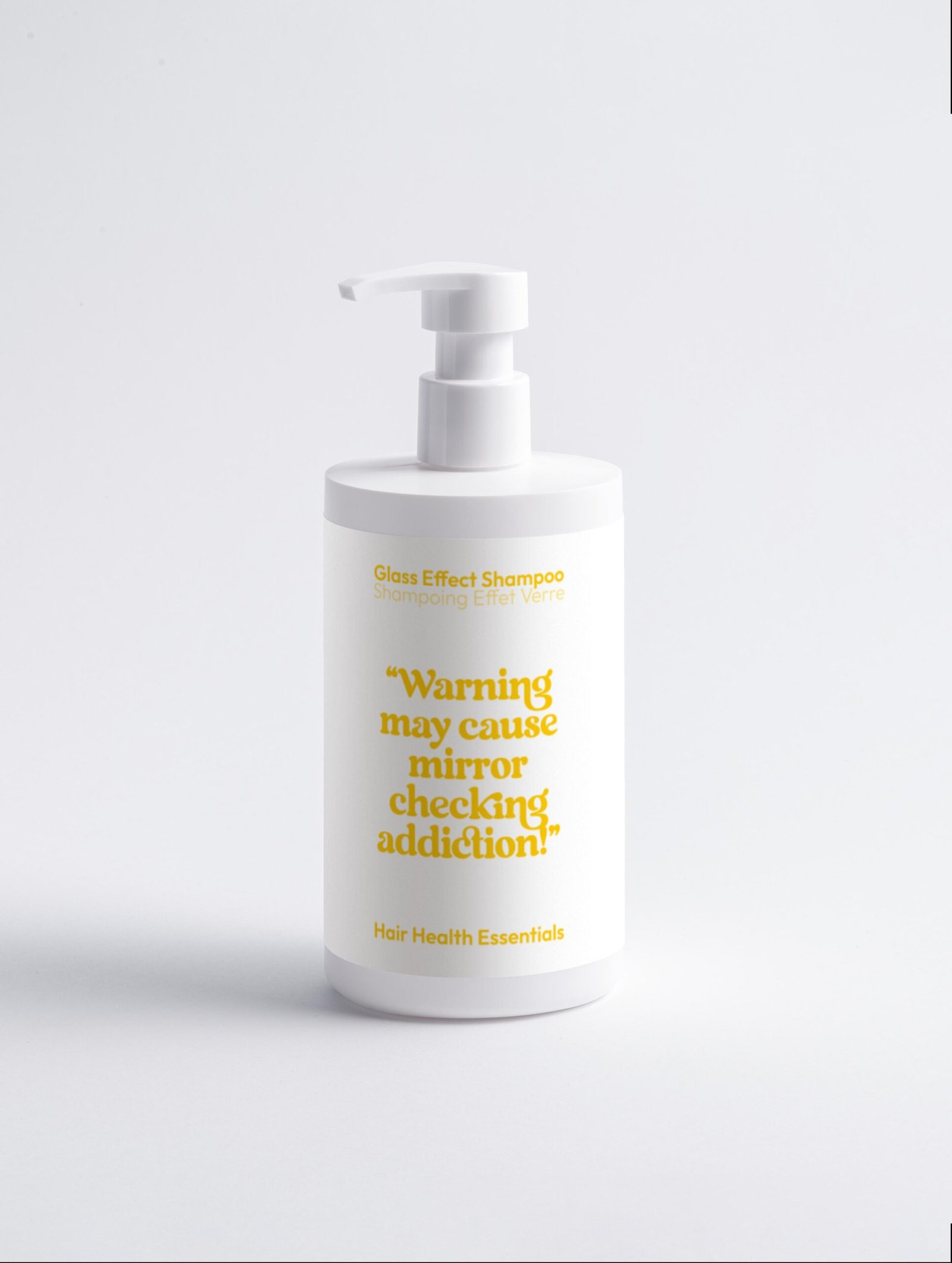
Glass Effect Shampoo
Shine begins at the wash.
€45
Gently purifies the hair, leaving it fresh and glossy. The hair feels incredibly smooth and full-bodied. Apply through damp hair and over the scalp, lather and rinse out. Adds gloss to the hair, hair feels smooth, delicately fragranced, hair-care.
A gentle, pH-balanced cleanse that leaves the cuticle smooth — because shine is what a flat cuticle does with light.

GLASS EFFECT
Glass Effect Shampoo
Shine begins at the wash.
A gentle, pH-balanced cleanse that leaves the cuticle smooth — because shine is what a flat cuticle does with light.
€45
Organic aloe leaf juice, not water, as the base — the first ingredient on the list.
A three-part coconut- and sugar-derived cleansing blend, buffered with betaine and glycerin, so hair is cleaned rather than stripped.
Gently purifies the hair, leaving it fresh and glossy. The hair feels incredibly smooth and full-bodied. Apply through damp hair and over the scalp, lather and rinse out. Adds gloss to the hair, hair feels smooth, delicately fragranced, hair-care.
Most shine products work on the surface. This one works on the wash. Shine is not something you add to hair — it is what light does when it meets a smooth, flat cuticle. Glass Effect Shampoo is built to clean thoroughly without lifting that cuticle: a blended, coconut- and sugar-derived cleansing system on a base of organic aloe leaf juice, buffered with betaine and glycerin, and finished on the acid side so the cuticle lies flat as hair dries.
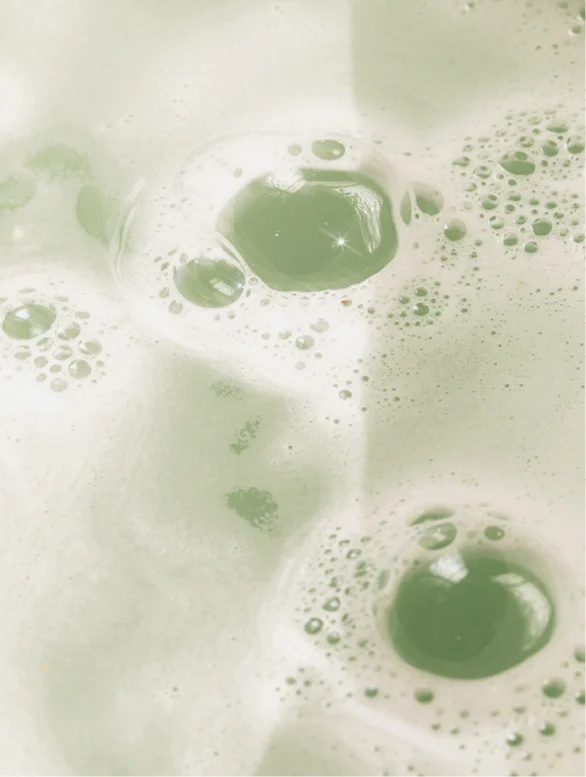
A shampoo built for the wash, not the shelf.
Glass Effect Shampoo is the first half of a two-step gloss system. Its job is not to coat hair in shine. Its job is to clean thoroughly without doing the damage that dulls it.
Cleans without stripping. The cleansing system blends three surfactants rather than relying on one: sodium coco-sulfate for genuine cleansing power, coco-glucoside for mildness, and cocamidopropyl betaine to soften the blend. Betaine and glycerin sit alongside them as humectants, so hair comes out of the wash clean rather than squeaking.
Leaves the cuticle flat. Citric acid holds the formula on the acid side of neutral. Hair fibre swells and its cuticle edges lift in alkaline conditions; in acidic conditions the fibre contracts and those edges lie down. A flat cuticle is what reflects light evenly.
Conditions while it cleanses. Brassicyl isoleucinate esylate and brassica alcohol, both derived from rapeseed, give the formula real conditioning action. Hair is easier to comb through wet — and wet combing is where a great deal of avoidable breakage happens.
Built on aloe, not water. Organic aloe leaf juice is the first ingredient on the list, occupying the position water usually holds.
The scent. An elegant woody aroma with green notes of freshly cut grass and smoky vetiver, built from lemon peel, patchouli and cedarwood oils.
400ml. Formulated to pair with Glass Effect Conditioner.
Shine is optics, not a coating.
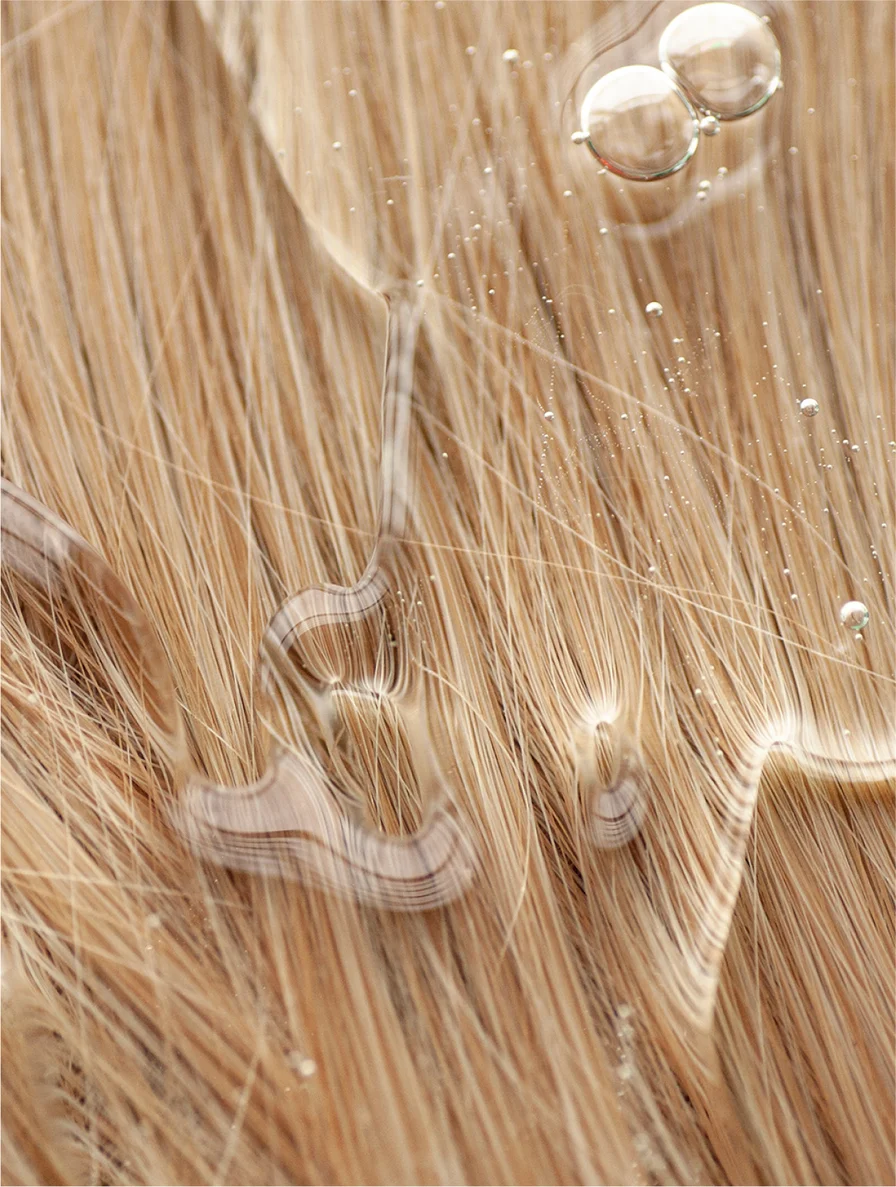
A hair fibre is covered in overlapping cuticle scales arranged like roof tiles. When those scales lie flat and smooth, light striking the fibre reflects in one direction, and you see a bright, coherent band of light running along the hair. That band is what we read as shine. When the scales are lifted, chipped or roughened, the same light scatters in every direction, and hair reads as dull no matter how healthy it is underneath.
This changes what a shine product should actually do. Most of them add something to the outside of the fibre. That works, briefly. But if the wash itself is roughening the cuticle, you are adding gloss on top of the thing that removed it.
Glass Effect Shampoo is designed the other way round: protect the surface during the part of the routine that is hardest on it.
Three decisions in the formula
A blended cleansing system, not a single surfactant. Cleansing works by lifting sebum and product residue away from the fibre and the scalp. A single aggressive anionic surfactant does that efficiently and takes some of the hair’s own surface lipid with it. Blending an anionic (sodium coco-sulfate) with a sugar-derived non-ionic (coco-glucoside) and an amphoteric (cocamidopropyl betaine) reduces the effective harshness of the system while keeping it genuinely cleansing.
An acidic finish. Keratin fibres swell in alkaline conditions, which lifts the cuticle edges and increases friction between strands. Citric acid brings the wash back towards hair’s own pH and keeps those edges down.
Conditioning built into the wash. Much of the mechanical damage in a hair routine happens when wet hair is combed. Including a plant-derived conditioning system in the shampoo itself means the fibre is already lubricated before a comb goes near it.
On sulphates — the honest answer
This shampoo is not sulphate-free, and we are not going to imply otherwise.
It contains sodium coco-sulfate, which is derived from coconut oil. It is not sodium lauryl sulfate. Sodium coco-sulfate is a mixture of fatty alcohol sulphates across a range of chain lengths with a larger average molecular size, which is why it behaves differently on skin from the short-chain SLS the sulphate-free conversation was originally built around. It is permitted under the COSMOS natural cosmetic standard, including in certified formulations made for sensitive scalps and for babies.
Sulphate-free is a marketing category, not a clinical one. What matters for scalp comfort is the whole cleansing system, its concentration and its pH — not whether one word appears on a label. If your scalp is genuinely reactive, that is a consultation conversation rather than a label-reading one.
Certification note. Glass Effect Shampoo is not COSMOS certified. Other products in the Hair Health Essentials range are. We would rather tell you which is which than let a certification on one product imply something about another.
How to wash for shine
Wet the hair thoroughly first. Genuinely soaked, not damp. Water does a meaningful amount of the loosening work before any shampoo touches the hair, and properly wet hair needs far less product.
Shampoo the scalp, not the lengths. This is the most common mistake we see. Dispense into your palms, rub them together, and apply to the scalp. The lengths are cleaned by the diluted lather running down them as you rinse, and that is enough. Concentrating shampoo on mid-lengths and ends over-cleanses the oldest and most fragile part of the fibre.
Use your fingertips, never your nails. Work in small circles across the whole scalp, from front hairline to nape, including behind the ears where product tends to sit. Sixty seconds is not too long.
Consider two cleanses. If you use styling product or dry shampoo, or wash less often than every other day, the first cleanse removes the buildup and the second is the one that actually works. The second lather will come up noticeably richer — that is the signal the first one did its job. If you wash frequently and use little product, one is fine.
Rinse for longer than you think. Residual surfactant is a common and entirely avoidable cause of a dull, flat-looking finish and an itchy scalp. Rinse until the water runs clear and the hair no longer feels slippery.
A note on cold rinses. You will read everywhere that a cold rinse seals the cuticle. The evidence for that is thin. What keeps the cuticle flat is pH, and that is already handled in the formula. Rinse at whatever temperature is comfortable — just rinse properly.
Follow with conditioner on the lengths. Glass Effect Conditioner is formulated as the second half of this system: shampoo at the scalp, conditioner from mid-lengths to ends. Squeeze the excess water out of your hair first so you are not diluting it.
Detangle in the shower. With conditioner still in, comb through with a wide-tooth comb starting at the ends and working upwards. Never start at the roots and drag down.
How often
Wash frequency should follow your scalp, not a rule. Oily or product-heavy scalps generally do better washed more often rather than less — leaving sebum and buildup sitting on the scalp is not training it to produce less. If you are unsure what your scalp needs, that is a conversation worth having in clinic.
Ingredients / INCI: Aloe Barbadensis (Aloe) Leaf Juice➀, Sodium Coco-Sulfate, Coco-Glucoside, Cocamidopropyl Betaine, Glycerin, Betaine, Aqua, Glyceryl Oleate, Sodium Chloride, Citric Acid, Parfum, Benzyl Alcohol, Brassica Alcohol, Hydrolyzed Wheat Protein, Sodium Benzoate, Brassicyl Isoleucinate Esylate, Potassium Sorbate, Limonene, Citrus Limon Peel Oil, Pogostemon Cablin Oil, Juniperus Virginiana Oil, Linalool, Cedrus Atlantica Oil/Extract
➀ Ingredients from organic farming
What each ingredient is doing
Aloe Barbadensis (Aloe) Leaf Juice. From organic farming. The base of the formula, in place of water. A humectant that holds moisture and is well tolerated on the scalp.
Sodium Coco-Sulfate. The primary cleansing surfactant, derived from coconut oil. Provides the lather and the actual cleansing power. See the sulphate note in “The science of shine”.
Coco-Glucoside. A non-ionic surfactant made from coconut and glucose. Mild, and it improves the quality and stability of the lather.
Cocamidopropyl Betaine. An amphoteric secondary surfactant. It reduces the irritation potential of the primary surfactant and helps build viscosity.
Glycerin. A humectant that draws and holds water, softening the after-wash feel.
Betaine. A humectant derived from sugar beet. Helps prevent the over-stripped, squeaky finish that makes hair feel rough while it is drying.
Aqua. Water.
Glyceryl Oleate. A refatting agent. Leaves a small amount of lipid on the fibre after rinsing so the hair is not left bare.
Sodium Chloride. Salt, used to adjust the viscosity of the formula.
Citric Acid. Adjusts and holds the pH on the acid side, which keeps the cuticle edges flat.
Parfum. The fragrance. Its two declarable allergen components, limonene and linalool, are listed separately further down.
Benzyl Alcohol. A preservative that keeps the product safe and stable in a wet bathroom environment.
Brassica Alcohol. A fatty alcohol derived from rapeseed. An emollient that supports the conditioning system.
Hydrolyzed Wheat Protein. Low molecular weight peptides that adsorb to the surface of the fibre, improving wet comb and reducing surface friction. Wheat-derived — see the note below.
Sodium Benzoate. A preservative, used alongside benzyl alcohol and potassium sorbate.
Brassicyl Isoleucinate Esylate. A rapeseed-derived conditioning agent. It deposits on the fibre during the wash, which is why this shampoo detangles rather than tangles.
Potassium Sorbate. A preservative.
Limonene. A naturally occurring component of citrus oils. A declared fragrance allergen.
Citrus Limon (Lemon) Peel Oil. Essential oil. The green citrus top note.
Pogostemon Cablin (Patchouli) Oil. Essential oil. The earthy base note.
Juniperus Virginiana (Cedarwood) Oil. Essential oil. Part of the woody accord.
Linalool. A naturally occurring component of essential oils. A declared fragrance allergen.
Cedrus Atlantica (Atlas Cedar) Oil/Extract. Essential oil. The smoky end of the woody accord.
One point of honesty about the name. There is no vetiver extract in this formula. “Smoky green vetiver” describes the fragrance accord, which is constructed from lemon peel, patchouli and cedarwood oils.
Who should take care
This formula contains hydrolysed wheat protein. Topically applied hydrolysed wheat proteins have been associated with allergic reactions in a small number of people, particularly those with an existing wheat allergy. If that applies to you, patch test first or choose another cleanser. Coeliac disease is a response to ingested gluten and is not triggered by a rinse-off shampoo, but if you would rather avoid wheat proteins altogether, tell us and we will point you to an alternative.
This formula contains essential oils and declared fragrance allergens (limonene, linalool). If you react to fragranced products, patch test on the inner forearm before use.
This formula contains cocamidopropyl betaine, which is an occasional contact allergen.
This product is not COSMOS certified. Other products in our range are, and we say so on those pages.
If you are dealing with shedding, a reactive scalp or a condition rather than a preference, a product decision is the wrong place to start. Book a consultation and we will look at it properly.
Formulation and copy reviewed by Clare Devereux, IAT Certified Clinical Trichologist, Hair Health Essentials. Last reviewed: July 2026.
Hair Health Essentials — Harley Street, London. Clinics also in Dublin.