

GLP-1 Hair Recovery Plan
GLP-1 hair shedding, understood.
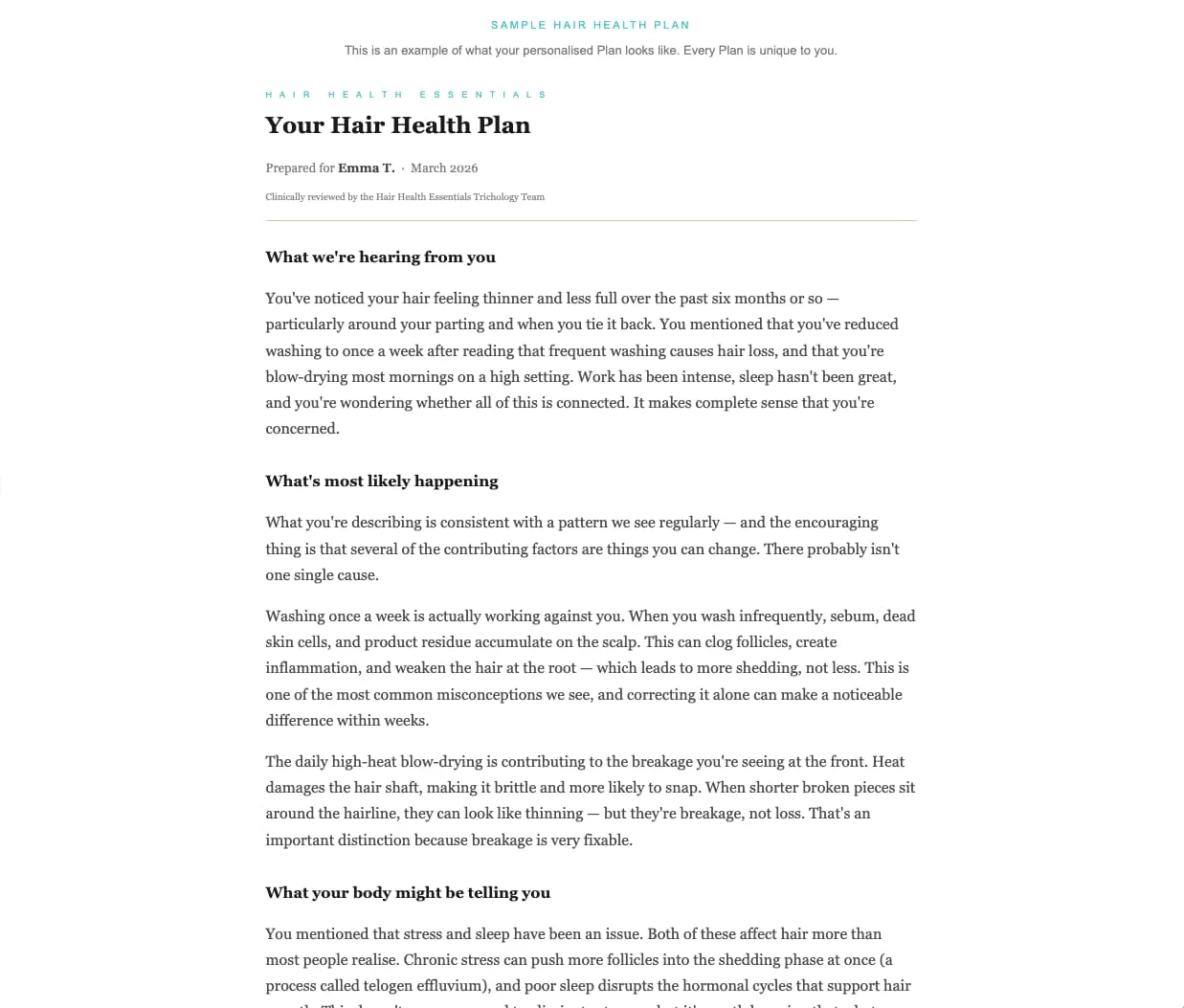
If you’ve started a GLP-1 medication and you’re seeing more hair in the shower, you’re not imagining it — and you’re not doing anything wrong. Tell us what’s happening. Within 5 working days, you’ll receive a hair and scalp plan built for GLP-1 shedding — your routine, your products, your week-by-week timeline — approved by Clare Devereux, certified clinical trichologist.
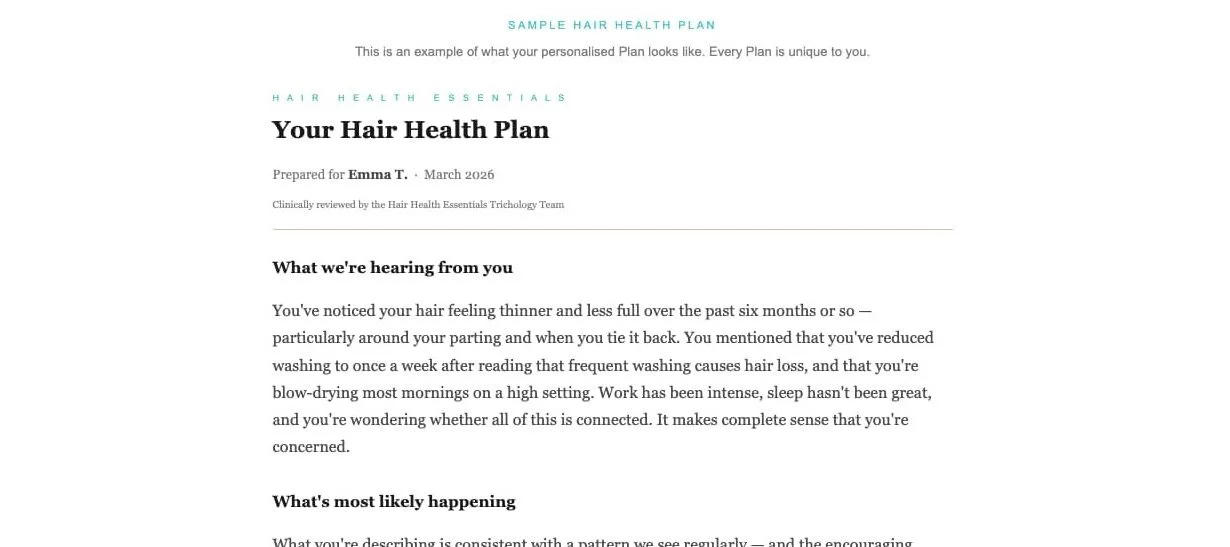
We limit the number of Plans we accept each week so our trichology team can give every submission the time it deserves. Every Plan is overseen by our IAT-certified clinical trichologist and reviewed before delivery. Delivered within 5 working days
Last reviewed June 2026 by Clare Devereux, IAT-certified clinical trichologist.
Pin it to your mirror

“I started Mounjaro about four months ago and I’ve lost a fair bit of weight, which I’m really pleased about. But over the last six weeks I’ve noticed a lot more hair coming out when I wash and brush it, and it feels thinner at the front. I’m not on any other medication. Is this the GLP-1? Will it grow back? I really don’t want to stop the medication, but I’m worried about my hair.”
This plan is educational hair and scalp care guidance. It does not constitute a medical diagnosis or replace medical advice. GLP-1 hair shedding is usually temporary — always speak to your prescribing doctor before changing any medication. Your data is stored securely on EU servers (Ireland/France). We retain Plan submissions for 24 months from your last interaction, or 6 years if you become an ongoing client. You can request access, correction, or deletion at any time by emailing hello@hairhealthessentials.com. Full details in our Privacy Notice.
Common Questions
GLP-1 hair shedding, answered
In most cases, yes. GLP-1 shedding is usually telogen effluvium — a temporary shift triggered by rapid weight loss, not permanent hair loss. The follicles themselves stay healthy, so once your body settles, regrowth typically follows over several months. Your Plan is designed to support your scalp through that recovery.
Telogen effluvium — the type of shedding GLP-1 usually triggers — typically takes three to six months to settle once the trigger eases (British Association of Dermatologists). In practice, shedding tends to slow as the body adjusts and weight loss steadies, with regrowth following. Individual timelines vary, which is why your Plan is built around where you are now.
Losing 50–100 hairs a day is normal for anyone (American Academy of Dermatology). During a shedding phase that figure rises, sometimes noticeably, which is why washing can feel alarming. More hair in the shower doesn’t mean you’re going bald — it usually means a temporary shedding cycle. Your Plan helps you tell the difference.
This isn’t a decision to make over your hair, and never one to make alone. GLP-1 hair shedding is usually temporary, and stopping abruptly can affect your health. Always speak to your prescribing doctor before changing any medication. A trichologist can help you protect your hair while you stay on treatment.
No, and this is an important distinction. GLP-1 shedding is usually diffuse telogen effluvium — hair thins more evenly across the scalp and tends to recover. Androgenetic (pattern) hair loss is gradual, follows a set pattern, and is progressive. Under trichoscopy these look very different. Shedding and breakage aren’t the same thing either.
You can’t always stop the shedding itself — it’s part of how your body responds to rapid weight loss — but you can protect the hair you have and support regrowth. Gentle scalp care, adequate protein and iron all help, and there are specific blood tests worth asking your GP for. Your Plan covers each of these.
A Hair Health Plan is written guidance based on what you tell us. It doesn’t include a live conversation or clinical examination. For a deeper, hands-on assessment — including trichoscopy, scalp analysis, and blood biomarker guidance — we offer clinical consultations at our Dublin and London clinics.