

How to get glass hair comes down to one thing: a smooth, flat cuticle, so light reflects evenly off every strand. In practice that means five steps — cleanse without leaving build-up, condition your lengths, dry gently, style with controlled heat, and protect the surface between washes. Technique creates the finish on the night. Looking after the cuticle is what lets your hair keep a gloss of its own.
Glass hair is everywhere at the moment.
That smooth, mirror-like finish that seems to catch every light in the room. Especially at this time of year, when the party invitations start arriving and we want our hair to look its very best.
Perhaps you’ve tried to recreate the glass hair look. Maybe you’ve bought the serum, booked the blow-dry or spent longer with the straighteners than you’d like to admit.
Sometimes it works beautifully. Other times, the shine has gone by the end of the evening.
I’ve written before about what creates glass hair and why it starts at the scalp. This time I want to be practical. As both a trichologist and a stylist, here is how to get glass hair, step by step — and how to keep it.
What glass hair actually is
Shine is simply light reflecting off the surface of your hair.
Each hair is covered by a protective outer layer called the cuticle, made of tiny overlapping scales, a little like tiles on a roof. When those scales lie smooth and flat, light bounces off evenly and in one direction. That’s what we see as shine.
When the cuticle is raised or roughened, the light scatters instead, and the hair looks dull even when it’s perfectly clean.
So every step below has the same aim: keep the cuticle smooth, and stop wearing it away.
How to get glass hair: my five-step routine
1. Cleanse without leaving build-up
Shine starts with a clean surface. Build-up from styling products, and minerals from hard water, can leave a film on the hair that dulls the way it reflects light.
Focus your shampoo on the scalp and let it rinse through the lengths. If your hair feels coated or heavy, your routine may need adjusting rather than adding to — an occasional clarifying wash can help.
2. Condition your lengths
Conditioner helps smooth the cuticle so it can reflect light. Concentrate it on your mid-lengths and ends, where damage builds up — that’s why the ends often look duller than the hair near the roots.
3. Dry gently
Hair is more fragile when it’s wet. Pat it dry with a towel rather than rubbing, and detangle from the ends upwards. Rough handling at this stage lifts the very cuticle you’re trying to smooth.
4. Style with controlled heat
This is where my background as a stylist comes in. Much of the glass hair finish is created with technique: a smoothing brush, gentle tension and the airflow pointing down the length of the hair, which helps the cuticle lie flat.
Use a heat protector, the lowest temperature that works for your hair, and fewer passes. A blast of cool air at the end helps set the style.
5. Protect the surface between washes
Sun, sea, chlorine and winter wind can all take their toll on the cuticle. Cover or tie your hair up when you can, and keep your heat-free days for when the finish matters less.
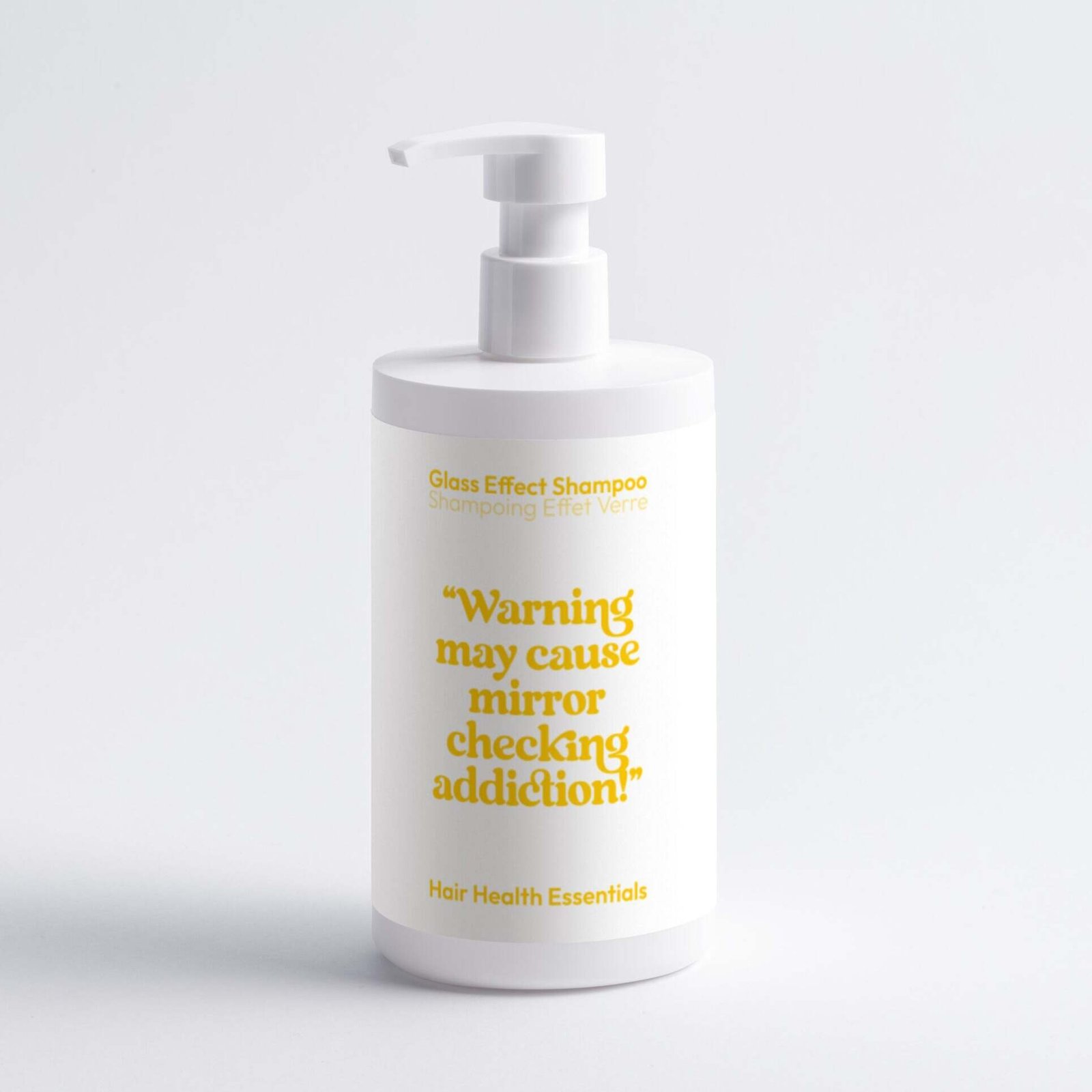
Steps one and two are where what you cleanse and condition with matters. Our Glass Effect range is formulated to help smooth and protect the cuticle — supporting your hair’s natural ability to reflect light, as one part of the routine above.
The Glass Effect range

How to make glass hair last
Knowing how to get glass hair is half the story. Keeping it is the other half. A blow-dry can create beautiful glass hair for an evening. Humidity, natural oils and product build-up are what gradually disturb it — damp weather can cause the cuticle to swell and lift slightly, which is why the shine can fade on a wet night out.
There’s nothing wrong with relying on technique. I love a beautiful blow-dry.
But if the finish depends on high heat every single day, the very thing creating the shine can slowly wear the cuticle away. Over time, the hair becomes harder to make shine at all.
The goal isn’t one perfect evening. It’s hair that has a gloss of its own — what I think of as hair longevity.
How to get glass hair on curly, blonde or coloured hair
Curly and wavy hair. Curls scatter light naturally, so you won’t get a flat mirror sheet without straightening — and that doesn’t make curly hair less healthy. It simply shines differently. Aim for lustre instead: conditioning and gentle drying matter even more, and daily straightening is best avoided.
Blonde and grey hair. Darker hair shows shine more easily, because of the contrast between the highlights and the hair itself. Lighter hair can look less glossy even when it’s in excellent condition, so judge it by how it feels as well as how it looks.
Coloured hair. Colouring, and especially bleaching, lifts and roughens the cuticle. Lower heat and regular conditioning make the biggest difference after colour.
Is glass hair the same as healthy hair?
Not necessarily.
Shine tells us about the surface of the hair, the part that has already grown. It doesn’t tell us very much about what’s happening at the scalp, where new hair is being made, or where it is in its growth cycle.
Someone can have beautifully glossy lengths and still be experiencing hair shedding. Equally, hair can look a little dull and be growing perfectly well.
Occasionally, hair that has become dull and dry can be linked to something internal, such as a thyroid imbalance or a nutritional deficiency. If your hair has changed noticeably and you’re also feeling unwell or run down, it’s worth speaking to your GP.
Technique creates glass hair for the night. Looking after the cuticle is what lets your hair keep its shine — and the scalp is where healthy hair begins.
Whether you’re chasing the glass hair finish for party season or simply want your hair to feel like yours again, my advice is the same: look after the surface, and understand what’s happening underneath.
Because healthy hair is important — but so is having hair that makes you feel fabulous.
Your hair has a story. Let’s understand it.
Want to understand what’s really going on with your hair?
Book a personalised hair and scalp consultation with Clare Devereux — in Harley Street, London, Dublin or online.
Frequently asked questions about glass hair
Start with a smooth, intact cuticle, because that is what reflects light evenly. Cleanse without leaving build-up, condition your mid-lengths and ends, and pat your hair dry rather than rubbing it. Then blow-dry with a smoothing brush, gentle tension and the airflow pointing down the length of the hair, using heat protection and the lowest temperature that works for you. Between washes, protect your hair from sun, sea, chlorine and winter wind. Technique creates the finish on the day; looking after the cuticle is what lets your hair keep a gloss of its own.
A glass hair finish created with a blow-dry usually lasts until humidity, natural oils or product build-up start to disturb the surface — often until your next wash, and sometimes less on a damp evening. Humidity can cause the cuticle to swell and lift slightly, which is why shine can fade quickly in wet weather. Hair with a healthy, intact cuticle tends to hold its shine for longer, because the smoothness is not coming from styling alone.
You can get a smoother, glossier finish without heat: careful conditioning, gentle drying and smoothing the hair as it dries all help. The flat, mirror-like glass hair finish itself usually relies on a blow-dry, because tension and controlled heat are what press the cuticle flat for a while. If you love the look, save the heat for the days that matter most and give your hair heat-free days in between.
Curly and wavy hair scatter light naturally because of their shape, so they will not produce the same flat mirror effect as straight hair. That does not make them less healthy — they simply shine differently. Curly hair shows its shine as individual light points across each curl rather than a single sheet of reflection. Well-conditioned curly hair with a smooth, intact cuticle has a beautiful lustre of its own, even if it does not match the glass hair trend.
It can. Chemical colouring, and especially bleaching, lifts and roughens the cuticle in order to deposit or remove pigment. Once the cuticle is damaged, it reflects light less evenly, and the hair can look duller. Good post-colour care — lower heat, regular conditioning and protecting the lengths from further damage — can help smooth the cuticle and restore some of its ability to reflect light. Darker colours also tend to show shine more easily than lighter ones, because of the contrast between highlights and shadow on the hair.
If your hair has become noticeably dull and dry and nothing seems to bring the shine back — especially if you are also feeling unwell or run down — it is worth having it looked at. Dull hair is sometimes linked to something internal, such as a thyroid imbalance or a nutritional deficiency like low ferritin. A trichologist can examine your scalp and hair under magnification, review your history and, where needed, work alongside your GP to investigate further. In most cases, the cause is simpler — build-up, heat damage or a routine that is not quite right — but understanding why is always the first step.
Key takeaways
Glass hair comes from a smooth, flat cuticle. When the tiny scales that cover each hair lie flat, light reflects evenly. Every step of a glass hair routine protects that surface.
How to get glass hair, in five steps. Cleanse without build-up, condition your lengths, dry gently, style with controlled heat, and protect your hair between washes.
Technique creates the finish; cuticle care makes it last. A blow-dry can create glass hair for an evening. Daily high heat wears the cuticle away and makes shine harder to achieve over time.
Adapt it to your hair. Curly hair shines as lustre rather than a mirror sheet, lighter hair shows shine less, and coloured hair needs gentler heat and regular conditioning.
Shine is not the same as health. If your shine has gone and nothing brings it back, don’t keep guessing. Understanding the cause is always the first step.
IAT-Certified Clinical Trichologist
Clare Devereux
Harley Street, London · Clinics also in Dublin
Clare’s background in hair is unusually broad. She trained as a stylist and colourist, worked red carpets at the Oscars and Golden Globes, and went on to qualify as an IAT Certified Clinical Trichologist practising from Harley Street. She brings that full range to every consultation — combining trichoscopy, blood biomarker analysis and genetic testing to get to the root of hair loss, thinning and scalp conditions. She also presents on hair health in broadcast media.
Hair Health Essentials provides clinical trichology consultations and specialist hair care. This content is for informational purposes and does not constitute medical advice. Where a concern falls outside Clare’s scope of practice, she will refer you to the appropriate medical professional.


With naturally formulated, COSMOS-certified products
— because your hair deserves both the science and the care.